Shopping Cart
No item in your cart !
RM0.00
View Cart

You're not alone. Baby gas after feeding is common, especially during the early months. Babies can swallow air while feeding or crying, and their developing digestive systems can also make them more prone to gas and tummy discomfort.
The good news is that there are several simple feeding habits parents can try to support a more comfortable feeding experience.
Important: Gas is common in babies, but not every episode of crying, fussiness or spit-up is caused by gas.
There may not be one single cause.
Common factors include:
Different babies respond differently, so it is helpful to look at your baby's overall feeding behaviour rather than focusing on one symptom alone.
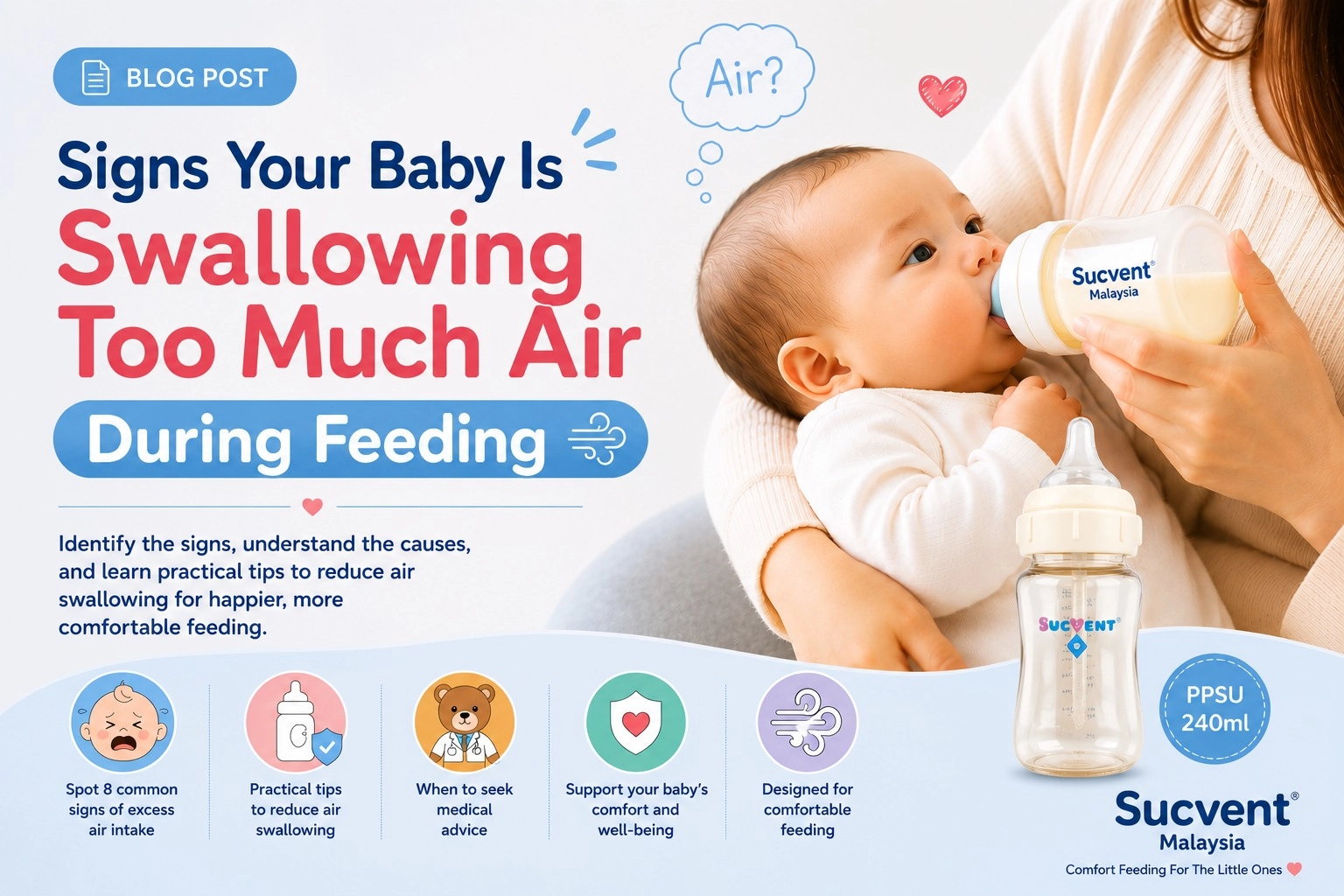
One of the common reasons for baby gas after feeding is swallowed air.
Your baby may take in more air when they:
When swallowed air becomes trapped in the tummy, some babies may become uncomfortable and may need to burp.
What parents can do:
There is no single burping schedule that works for every baby. Some babies need to burp during a feed, while others may only need to burp afterwards.
A milk flow that is too fast for your baby may make feeding harder to coordinate.
You may notice:
What parents can do:
During bottle feeding, keeping the bottle relatively horizontal can help control the flow and support a steadier feeding pace.
A comfortable, effective latch helps your baby feed efficiently.
An ineffective seal may allow more air to enter during feeding.
Signs to watch for:
If breastfeeding continues to be difficult, a lactation consultant or healthcare professional can help assess your baby's latch and feeding technique.
Babies may feed more eagerly when they become extremely hungry.
Crying can also lead to more air being swallowed. NHS guidance recommends responding to early hunger cues rather than waiting until a baby is already crying.
Early hunger cues may include:
What parents can do:
Try offering a feed when your baby begins showing early hunger cues.
A calm feeding environment may help your baby feed at a more comfortable pace.
For formula-fed babies, preparation can introduce air bubbles into the feed.
The American Academy of Pediatrics notes that more mixing and shaking can create more bubbles, which may result in more swallowed air. At the same time, parents should always follow the formula manufacturer's preparation instructions rather than changing the preparation method themselves.
What parents should do:
The CDC stresses that the correct water-to-powder ratio is important for your baby's nutrition and safety.
Sometimes, a gassy baby is simply experiencing a normal part of early development.
Young babies commonly swallow some air during feeding, and some babies are more prone to gas than others.
This means:
Gas does not always mean something is wrong.
Look at your baby's overall wellbeing:
Occasional gas by itself is usually not a reason to panic. However, persistent or unusual symptoms should be discussed with a healthcare professional.
For bottle-fed babies, bottle and teat design are also factors parents may consider.
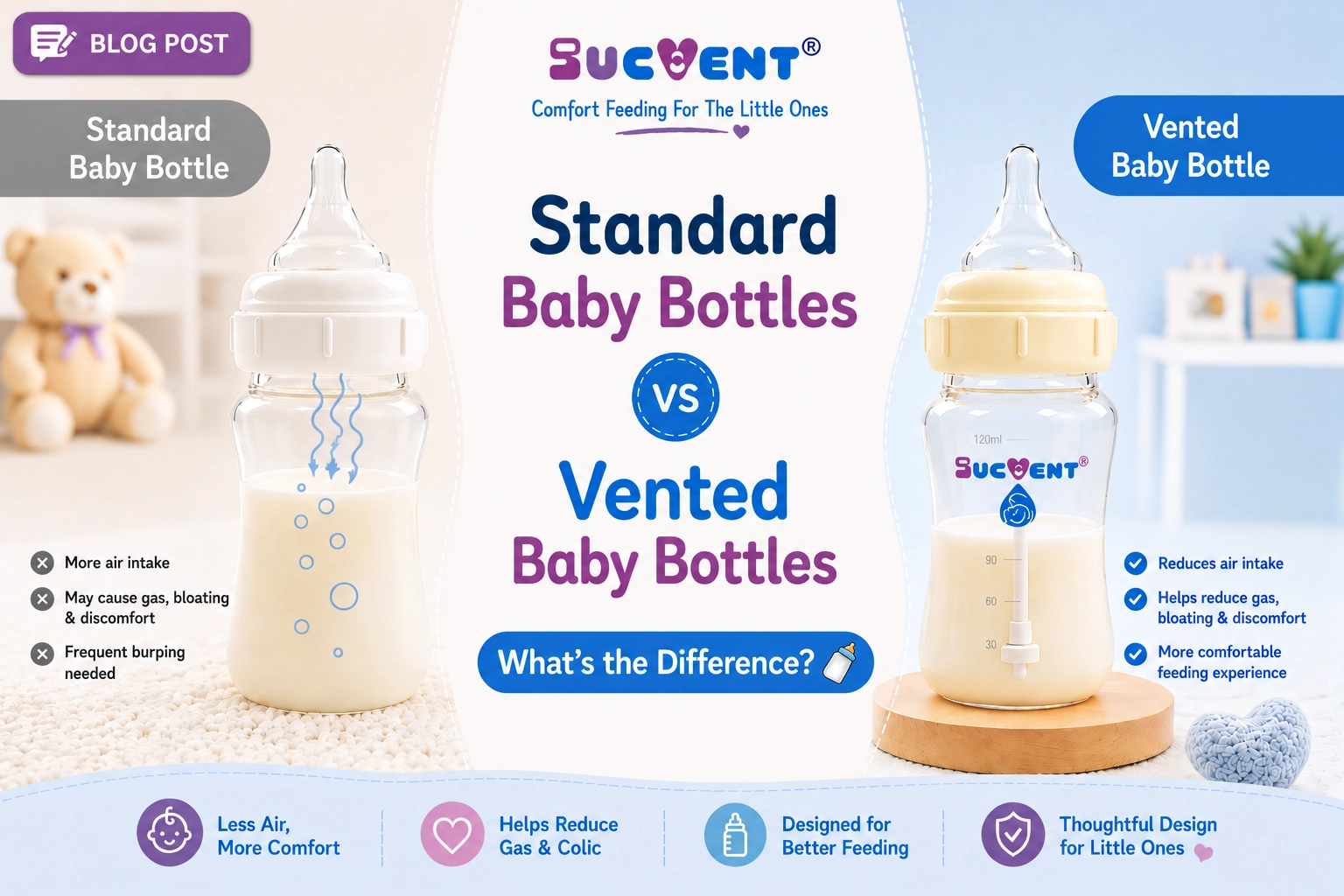
Some bottles use venting systems that are designed to help manage airflow during feeding. The American Academy of Pediatrics notes that specially designed bottles, including vented bottles, may help reduce the amount of air some babies swallow.
However:
Not every baby will respond in the same way, and a vented bottle is not a guarantee against gas or colic.
When choosing a bottle, consider:
Pause during feeding and burp your baby when they seem uncomfortable or need a break.
Some babies need burping during the feed, while others may only need it afterwards.
Hold your baby in a comfortable semi-upright position and support their head and neck.
For bottle feeding, keep the bottle relatively horizontal so milk flows steadily rather than too quickly.

Your baby may feed differently as they grow.
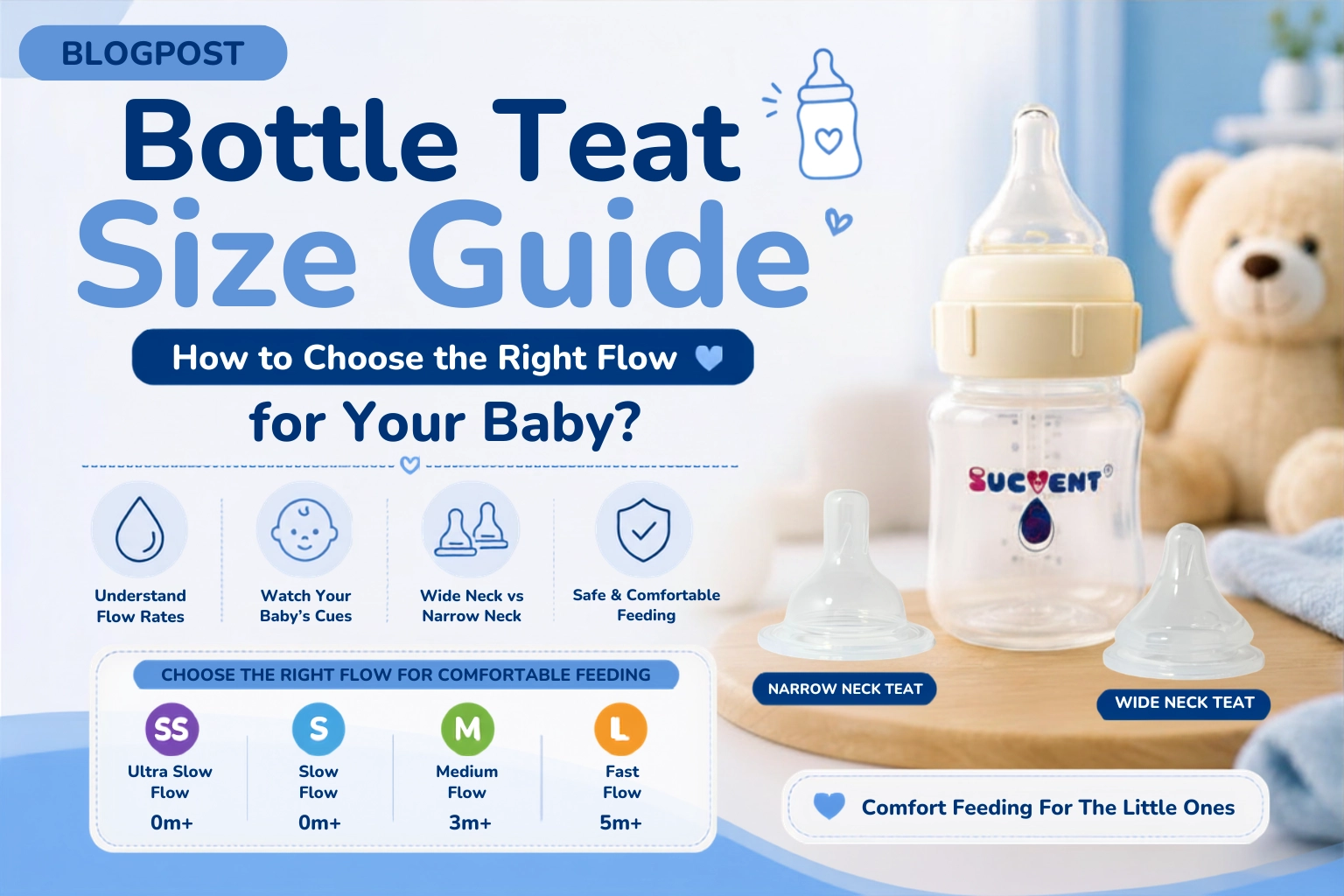
Watch for signs that the current teat flow may not suit your baby, such as:
A teat flow should be selected according to your baby's feeding ability and the manufacturer's guidance.
Look for early hunger cues rather than waiting until your baby is crying intensely.
This may help create a calmer feeding experience and reduce the chance of swallowing extra air while crying.

Watch your baby's cues.
Your baby may need a pause when they:
Allowing your baby to pause can help them control the pace of feeding.
When your baby is awake, gentle bicycle-leg movements may help move trapped wind.
You can also try a gentle tummy massage if your baby is comfortable.

Some vented bottle designs are intended to help reduce the amount of air a baby swallows during feeding.
However, bottle design is only one part of comfortable feeding.
Other important factors include:
At Sucvent Malaysia, our bottles are designed with a Balanced Vent System that allows air exchange while helping reduce unnecessary air intake during feeding.
Key design features include:
The enclosed vent design prevents milk from entering the vent while remaining easy to clean.
Every baby's feeding experience is different. A bottle alone cannot explain or solve every cause of gas, so feeding position, teat flow, latch and feeding technique remain important.
Gas is common, but parents should not assume that every symptom is simply gas.
Speak to a healthcare professional if your baby has:
These symptoms may require assessment for causes other than ordinary gas.
Seek urgent medical attention if your baby appears seriously unwell or develops severe symptoms.
If your baby gets gassy after feeding, remember:
The goal isn't to eliminate every bit of gas — that is not realistic for babies.
The goal is to support a comfortable, calm and responsive feeding experience for your little one.

Discover thoughtfully designed feeding solutions from Sucvent Malaysia.
🌐 Website: www.sucvent.my
📸 Instagram: @sucvent.my
📘 Facebook: Sucvent Malaysia







Thoughtfully designed for safety and joyful feeding. Shop now to give your little ones the best care!